Monitoring and Distributed Tracing for Java in Kubernetes with BitDive

· 5 min read
Dmitry Turmyshev
Product Manager | Developer Experience and Software Quality

TL;DR: Cloud-native observability shouldn't require root access or manual instrumentation inside containers. BitDive provides a Trace-Based Quality Gate for Kubernetes, capturing method-level traces from pods and transforming them into Trace Replay testing suites that run anywhere.

Java Observability in Kubernetes

Monitoring and Optimizing Java Workloads in Kubernetes with BitDive

Monitoring and optimizing Java workloads in Kubernetes presents unique challenges. From the dynamic nature of microservices to the complexity of distributed systems, traditional tools often fall short. BitDive offers a revolutionary approach to code-level observability and real-time monitoring, purpose-built for Kubernetes environments.

Application Monitoring - Keep Your Finger on the Pulse of Your Systems

· 4 min read
Evgenii Frolikov
Senior Java Architect | Expert in High-Load Systems & JVM Internals

TL;DR: Traditional monitoring is a defensive measure. BitDive turns monitoring into an offensive quality strategy by closing the loop between runtime observations and automated Trace Replay (glossary). Stop just watching your metrics, start using them to build a self-verifying application based on Real Runtime Data.


BitDive Application Monitoring - Real-time dashboards for Java performance and system health tracking

Modern applications are increasingly becoming business-critical. Unstable performance, prolonged downtime, or a lack of visibility into what's happening inside the system can lead to significant financial losses and reputational damage. Meanwhile, traditional logging-based methods of monitoring often fall short: logs may be insufficient, or they get lost in a massive stream of messages.

Microservices Monitoring - Mastering Distributed System Observability

· 5 min read
Evgenii Frolikov
Senior Java Architect | Expert in High-Load Systems & JVM Internals

TL;DR: Monitoring microservices isn't just about finding bottlenecks, it's about recording the "Golden Path" of cross-service interactions. BitDive captures distributed traces and transforms them into automated Integration Tests, providing the Real Runtime Data for complex service meshes.


BitDive Microservices Monitoring - Centralized observability and distributed tracing for complex Java systems

Microservices architecture offers businesses flexibility, independent development teams, and the ability to scale individual services. However, the more complex and distributed a system is, the more pressing it becomes to have centralized monitoring and a clear view of how services interact.

Automatic Exception Logging - A Key to Proactive Application Monitoring

· 5 min read
Dmitry Turmyshev
Product Manager | Developer Experience and Software Quality

TL;DR: An Exception is an Opportunity. BitDive transforms production errors into Regression Tests. By capturing the full method context during an exception, BitDive provides AI agents with the Real Runtime Data needed to propose a fix and a ready-made test case to verify that the bug never returns.


Automatic Exception Logging

The Challenge of Debugging Distributed Applications

Distributed systems have become the backbone of modern software architecture. But with this complexity comes the challenge of tracking down errors and understanding their impact across multiple services. Relying solely on logs or traditional error-tracking tools often leaves developers frustrated, chasing incomplete information.

That's why BitDive introduces a game-changing solution that combines error interception, distributed tracing, correlation IDs, metrics, and alerts-delivering developers a complete observability toolkit for debugging distributed applications with ease and precision.


Understanding the Differences: Observability vs. Monitoring vs. APM vs. Profiling

· 5 min read
Dmitry Turmyshev
Product Manager | Developer Experience and Software Quality

TL;DR: Modern Observability is incomplete without Automated Verification. While APM and Monitoring tell you what is happening, BitDive uses runtime traces to create Trace Replay suites, closing the loop between seeing a performance issue and ensuring it never returns.


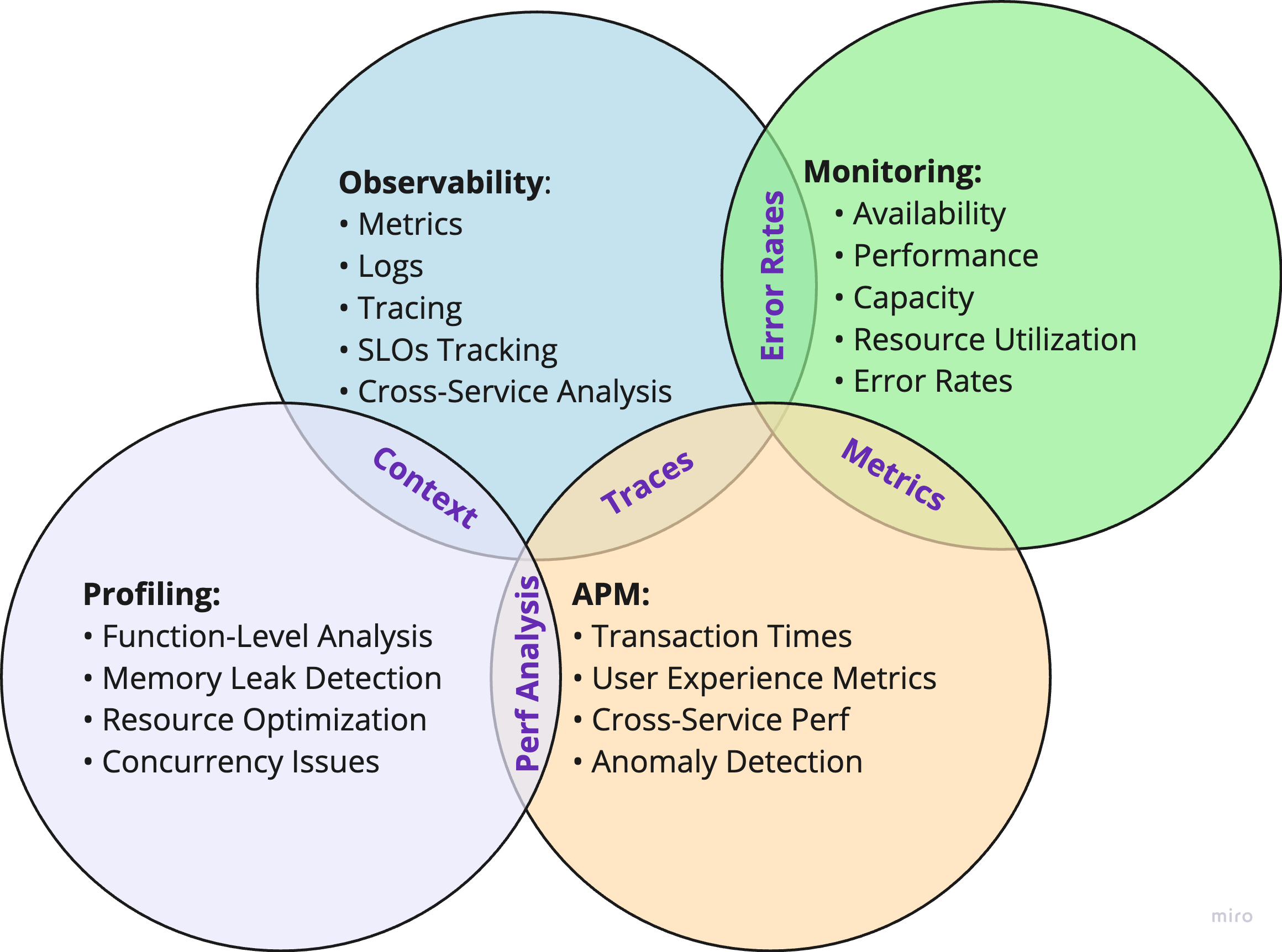
In today's cloud-native environments, maintaining optimal application performance requires multiple complementary approaches. While these tools share some features, they serve distinct purposes in modern performance management.

Venn diagram illustrating the relationships and overlaps between Observability, Monitoring, APM, and Profiling

Application Performance Management (APM)

APM's evolution reflects the changing landscape of application architecture. Originally designed for monolithic applications, modern APM tools now handle the complexities of distributed systems and microservices.

How can you measure software performance?

· 4 min read
Dmitry Turmyshev
Product Manager | Developer Experience and Software Quality

TL;DR: Metrics are just the baseline; Behavior is the goal. Measuring throughput and latency is essential, but in 2026, BitDive elevates this by monitoring Unexpected Behavior Changes. By comparing real-world execution traces against baseline replays, we ensure that performance gains don't come at the cost of correctness, providing the Real Runtime Data for your PRs.


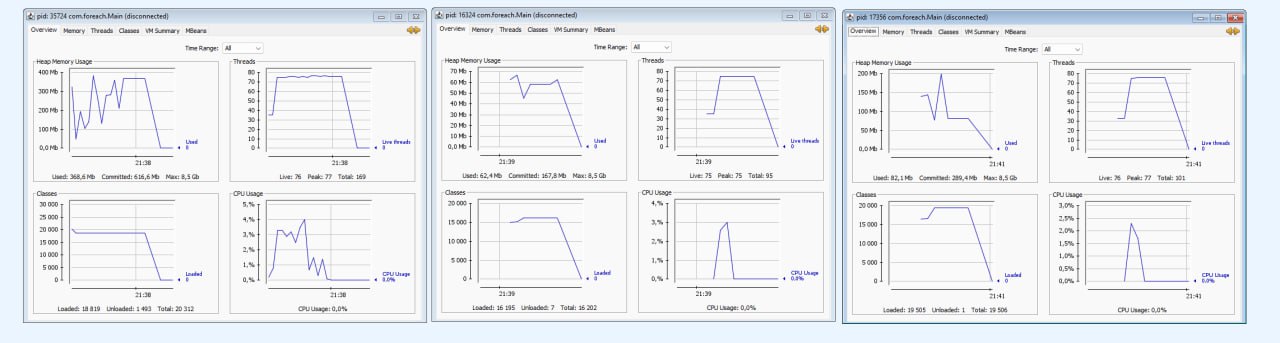
Software Performance Metrics - Analyzing throughput and latency for Java application optimization

Performance testing is crucial for software success, ensuring systems meet user expectations and business requirements. This guide explores core performance testing concepts and provides actionable strategies for effective implementation.

Enhancing Application Performance, Strategies for Optimization

· 13 min read
Dmitry Turmyshev
Product Manager | Developer Experience and Software Quality

TL;DR: True optimization requires verification. Improving application speed is a wasted effort if a subsequent code change brings back the bottleneck. BitDive uses runtime traces to create deterministic Performance Regression tests, ensuring your optimizations stick and mission-critical logic remains fast in every build.


Application Performance Optimization

Imagine your app as a sleek sports car in a high-stakes race. Every millisecond of lag is like a hiccup in the engine, potentially costing you the lead, and in this case, valuable users and revenue. But fear not, digital speed demons! We're about to pop the hood and reveal the secrets of turbocharged app performance. From code optimization tricks that would make a Formula 1 engineer jealous, to scaling strategies that could handle a million users without breaking a sweat, we're covering it all.

Using Flame Graphs to Visualize Method Execution Times in Distributed Systems

· 5 min read
Evgenii Frolikov
Senior Java Architect | Expert in High-Load Systems & JVM Internals

TL;DR: The Trace is the Test. In distributed microservices, BitDive captures cross-service spans and transforms them into deterministic JUnit Replay Plans. By using flame graphs as the blueprint, BitDive allows you to verify complex distributed logic end-to-end as Real Runtime Data.


At BitDive.io, we leverage flame graphs not for traditional CPU profiling, but for visualizing the time (in milliseconds) that each method in a span consumes. This approach is especially suited for distributed systems with microservices running across different servers and processors. In this post, we will explain why flame graphs are effective for this use case, how they can help uncover bottlenecks in distributed architectures, and why this method could be more suitable for your system's needs.

Unlocking Performance Bottlenecks with Flame Graphs

· 8 min read
Dmitry Turmyshev
Product Manager | Developer Experience and Software Quality

TL;DR: Flame Graphs are not just for visualization; they are the blueprint for Automated JUnit Testing. BitDive uses the same instrumentation technology that creates these graphs to record method-level inputs and outputs, transforming "passive observability" into Automated Verification.


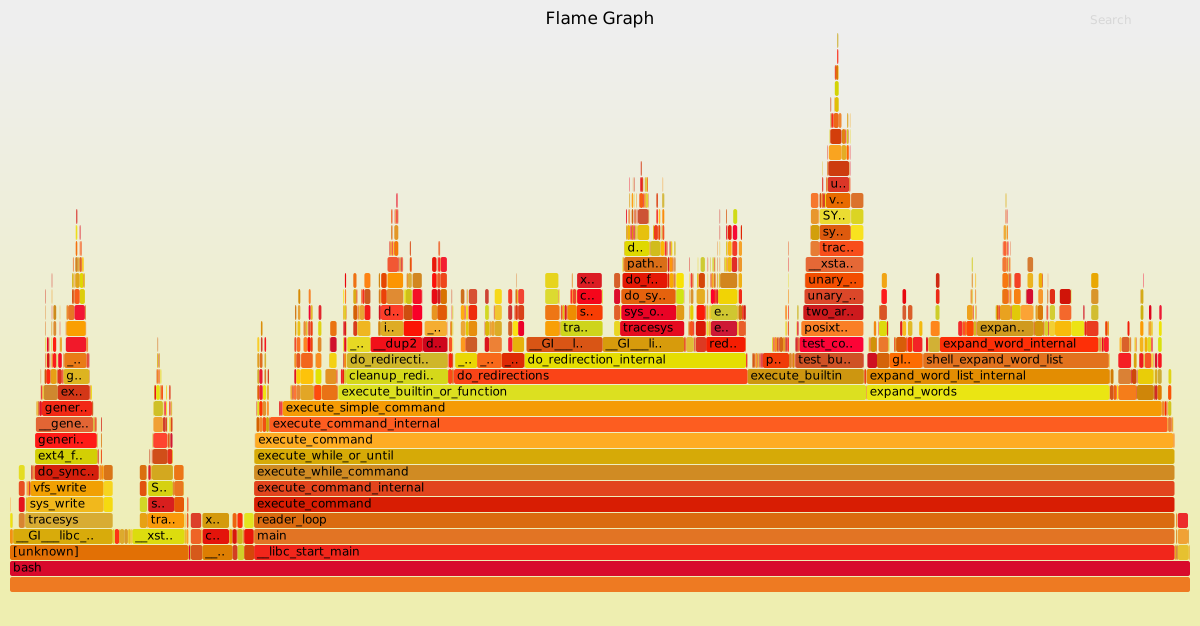
Interactive CPU Flame Graph - Visualizing Java stack traces and performance bottlenecks with BitDive

Imagine you're an engineer at a bustling tech company, racing against time to make your app lightning-fast. Your code is a maze, and somewhere in there lurks a sneaky performance bottleneck. Enter flame graphs: the secret weapon of modern software optimization. Born from the brilliant mind of Brendan Gregg, these visual tools have become the go-to for tech giants and startups alike. They're not just graphs; they're x-ray vision for your code, revealing hidden CPU hogs that could be costing your business millions. In a world where milliseconds can make or break user experience (and profits), flame graphs have emerged as the unsung heroes of the enterprise tech world. Curious about how they're transforming the way we build and optimize software? Let's dive in and uncover the fiery truth behind these game-changing tools.